

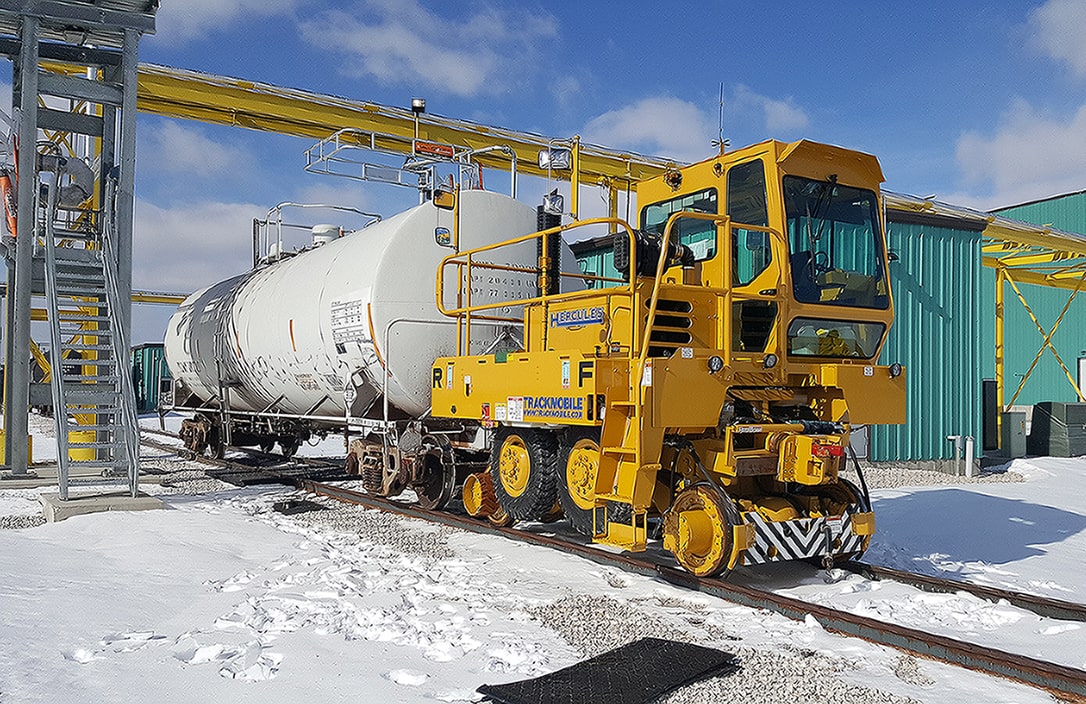
Railcar Mover Maintenance & Operating Tips for Winter Weather
Weather can be unpredictable in Chicagoland. These railcar mover maintenance and operating tips can help keep your business running smoothly all winter long.
01/22/2024
Freezing cold temperatures, ice, sleet, and snow can make the winter months especially challenging for railyards, container yards, intermodal facilities, and ports in the Chicago area. Proper fleet management means making sure that your railcar movers and their operators are prepared for winter weather. These railcar mover maintenance and operating tips can help minimize downtime and keep your business running smoothly all winter long.
Winter Maintenance Tip #1: Winterize Your Fuel
By late November, you should be using a diesel fuel additive for winter on all of your diesel railcar movers. This will deep clean your engine’s fuel system and prevent your fuel from gelling in cold weather. When possible, keep your rail mover’s tank full, as this can prevent condensation.
Winter Maintenance Tip #2: Change Out Your Sanders
While sanders are always checked during PM service, sander repairs are often overlooked. Making sure your sanders are functioning properly is especially important during the colder months, as problems can lead to traction and braking issues. The reality is, steel on steel will never work on damp, wet, or frozen tracks.
Winter Maintenance Tip #3: Choose the Right Sand
Sand is essential during the winter months, but sand from your local hardware store can turn to cement, which can cause major maintenance issues. Contact our parts department to order traction sand in bulk so that you’re ready for winter weather.
Winter Maintenance Tip #4: Check Your Block Heater
Plugging in your railcar mover’s block heater during cold weather can help keep your engine running smoothly through the winter months. Before cold weather hits, make sure you have a high-quality cord and a functioning socket to plug it in.
Winter Maintenance Tip #5: Watch Out for Coding Issues
When the weather gets cold, your railcar mover’s malfunction codes can go a bit haywire. If you start your engine and see malfunction codes, warm the unit and exercise all functions, including the hydraulics, before making a service call. While the service experts at Voss Equipment are happy to make service calls whenever you need them, we don’t want you to end up spending unnecessary money. If the codes stay on for longer than 10 minutes and you’ve followed the instructions above, then it’s time to schedule rail car mover service.
Winter Maintenance Tip #6: Replace Old Batteries
The older batteries get, the less reliable they become. If your railcar mover batteries are over four years old, we recommend you replace them before the cold weather months. And if you do run into an issue where your unit doesn’t start after two to three tries, don’t keep trying. This can damage the starter and cause other costly repairs. Instead, contact our dispatcher to schedule a service call right away.
Winter Maintenance Tip #7: Keep the DEF Tank Below ¾ Full
While it’s best to have a full fuel tank, the fluid in your DEF tank can freeze if the unit sits for a prolonged period during extreme cold weather. Making sure the tank is only ¾ full can reduce the damage if the tank freezes.
Winter Operating Tip #1: Wear Proper Cold Weather Gear
Winter weather can mean cold temperatures and low visibility. That’s why it’s incredibly important to make sure that railcar mover operators are decked out in high visibility vests, warm clothing, hats, and gloves.
Winter Operating Tip #2: Keep Speed Under Check
Whenever the ground is wet or icy, speed becomes an increased risk. If winter weather strikes your container yard, railyard, intermodal facility, or port, be sure that your operators are keeping their speed in check and practicing extra caution while operating.
Winter Operating Tip #3: Take Scheduled Breaks & Replenish Calories
In cold weather conditions, energy levels can drop more quickly. That’s why it’s especially important for anyone operating a rail car puller to take all of their scheduling breaks and make sure they’re replenishing calories throughout the day. This can prevent costly and dangerous mistakes from happening because of fatigue.
Need more winterization tips to keep your equipment fleet running smoothly? Check out our forklift winterization blog. Need new equipment? Whether you’re looking for gas-powered Trackmobile railcar movers like the Titan, Atlas, and Hercules models or electric mobile railcar movers from Zephir, Voss Equipment has you covered. We also offer railcar mover maintenance, Zephir and Trackmobile parts, and railcar mover operator training near Chicago. Contact one of our Voss Equipment locations today to find out what we can do for you!