

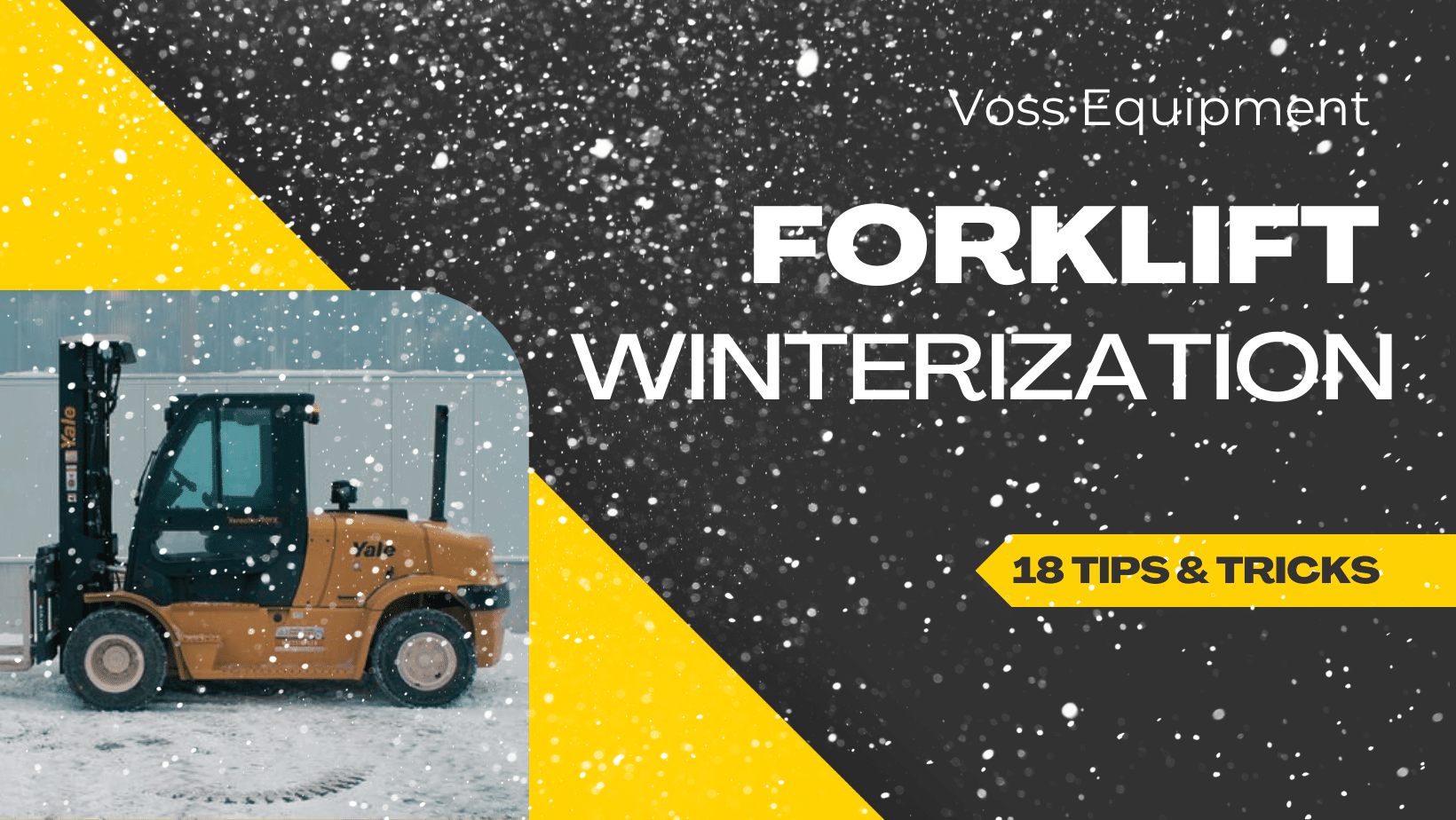
Forklift Tips & Tricks for Winter-Ready Equipment
In Chicagoland, winter weather can be brutal, especially for construction sites. But the freezing cold temperatures, ice, sleet, and snow doesn’t always stay confined to the winter months. Proper fleet management means making sure that your lift trucks are ready for whatever weather comes your way. These forklift tips and tricks can help ensure that your equipment is winter-ready.
01/08/2025
In Chicagoland, winter weather can be brutal, especially for construction sites. But the freezing cold temperatures, ice, sleet, and snow doesn’t always stay confined to the winter months. Proper fleet management means making sure that your lift trucks are ready for whatever weather comes your way. These forklift tips and tricks can help ensure that your equipment is winter-ready.
Forklift Tip #1: Allow for Longer Warm-Up Times
In the cold weather, lift truck hydraulic systems and engines need a longer warm-up time. Before you start initiating tasks, make sure that you allow your forklift to idle for several minutes so that the oil can circulate freely through the system, preventing increased fuel consumption and wear and tear.
Forklift Tip #2: Grease Your Forklift’s Moving Parts
Before using your forklift in cold weather conditions, be sure to generously grease any moving parts so they’re less likely to slow down or jam up during the winter months.
Forklift Tip #3: Run Your Forklift for at Least Thirty Minutes per Use
Many lift truck engines use a denser fuel composition during the first thirty minutes of ignitions. During this time, low temperatures prevent evaporation, allowing water vapor to accumulate in the oil and exhaust. By keeping the engine running for at least thirty minutes, you can prevent future issues.
Forklift Tip #4: Use Winterized Fluids / Lubricants
One important part of forklift maintenance is making sure you’re using the right kinds of fuel, fluids, and lubricants. Using winterized fluids and lubricants can help curb ice formation, clouding, and/or crystallizing in hydraulic fluid.
Forklift Tip #5: Use Winterized Fuel on Diesel Engines
Any lift truck that runs on diesel should be using winterized fuel during cold weather months. The extra additives in winterized diesel prevents coagulation, which can cause fuel starvation, loss of engine power, and stalling.
Forklift Tip #6: Clean Your Battery Cables
Corroded battery cables and terminals can cause costly battery damage, so it’s important to make sure they’re cleaned properly if you want to get the most out of your forklift battery, especially when it’s working extra hard in cold weather.
Forklift Tip #7: Store Your Forklift Battery Properly
Proper forklift battery storage can help keep your lift truck running smoothly, even in the coldest weather.
Forklift Tip #8: Make Sure Your Battery is Fully Charged
Cold weather is hard on batteries, so you’ll want to make sure your battery is at maximum charge/ strength to prevent any problems. For outdoor LPG units sitting overnight or for extended periods, using a battery tender can prevent battery drainage and reduce no-start or battery replacement calls.
Forklift Tip #9: Check Your Hydrometer and Hoses
Hydrometers evaluate your antifreeze levels and coolant conditions. Checking your hydrometer before cold-weather use ensures that your lift truck is winter-ready. You’ll also want to check your hose for any leaks or other damage.
Forklift Tip #10: Use LED Forklift Lights
For outdoor-use, lift truck lights are essential for visibility, especially if it’s actively snowing or if it’s dark and gray outside. If your lift truck is still using halogen lights, it may be worth it to swap them for LED bulbs. Not only are LED lights longer-lasting, but they’re much brighter in cold temperatures and are adept at absorbing operational vibrations, preventing breakage.
Forklift Tip #11: Check the Air Pressure on Your Forklift Tires
Before tackling any cold-weather job, it’s essential that you check the tire pressure in all of your forklift tires, as tire pressure decreases as temperature drops.
Forklift Tip #12: Check the Tread on Your Forklift Tires
Before trying to use your forklift in snowy or icy conditions, you need to make sure the tramp depth provides enough grip.
Forklift Tip #13: Consider Snow Chains for your Forklift Tires
If your tire’s tramp depth seems inadequate, you might want to consider snow chains.
Forklift Tip #14: Keep Job Sites Plowed & Gritted
In addition to making sure you have enough grip from your tires, it’s important to clear your path of ice, snow, or frozen mud by regularly plowing or gritting the area. This will help keep your equipment and your forklift operator safe. Need a utility vehicle with a plow and salt spreader attachment? Check out the Industry Pro Pro 7 XL utility vehicle.
Forklift Tip #15: Check Your Forklift’s Heater & Windshield Wipers
If your forklift has an inbuilt cab, you’ll want to check to make sure you’re your windshield wipers and your forklift’s heater are working properly to prevent visibility problems. Remember: Heaters rely on the engine coolant system. Ensuring coolant levels are at maximum helps heaters function optimally.
Forklift Tip #16: Consider Forklift Shields
If your forklift doesn’t have a bounded cab, forklift shields can help. We recommend corrugated hard plastic covers, as they’re more durable than vinyl wraps, which become quite brittle in cold weather. They’re also better at directing rain away from the windshield.
Forklift Tip #17: Clean Your Forklift After Every Use
Keeping your forklift clean is an essential part of forklift maintenance year-round, but it’s especially important during the colder months. Winter debris, including snow, ice, mud, salt, and grit should be removed after every use, as they can easily build-up and prevent your lift truck from functioning properly.
Forklift Tip #18: Get Your Forklift Serviced
Preventative maintenance is one of the most important features of successful fleet management. By ensuring that your lift truck has undergone all regular inspections and scheduled maintenance, you’ll have confidence that your forklift can withstand the harsh winter months, which can be especially brutal to starters and chokes.
Are you planning on utilizing your lift truck for winter construction? Contact your nearest Voss Equipment dealer today to schedule forklift service, purchase forklift parts, or for help winterizing your forklift.