

Are Warehouse Automation & Robotics Myths Hurting Your Bottom Line?
Believing these common warehouse automation and robotics myths could be hurting your bottom line. Find out the truth about whether robotic forklifts and other warehouse automation is right for your business.
02/10/2025
The benefits of warehouse automation are clear. Still, even as more companies continue to embrace automation in material handling, others remain skeptical. While there are valid considerations to take, many of the commonly cited reasons for bypassing warehouse automation are actually myths. And believing these automation myths could be hurting your bottom line.
Myth # 1: Robots Will Completely Replace Human Workers
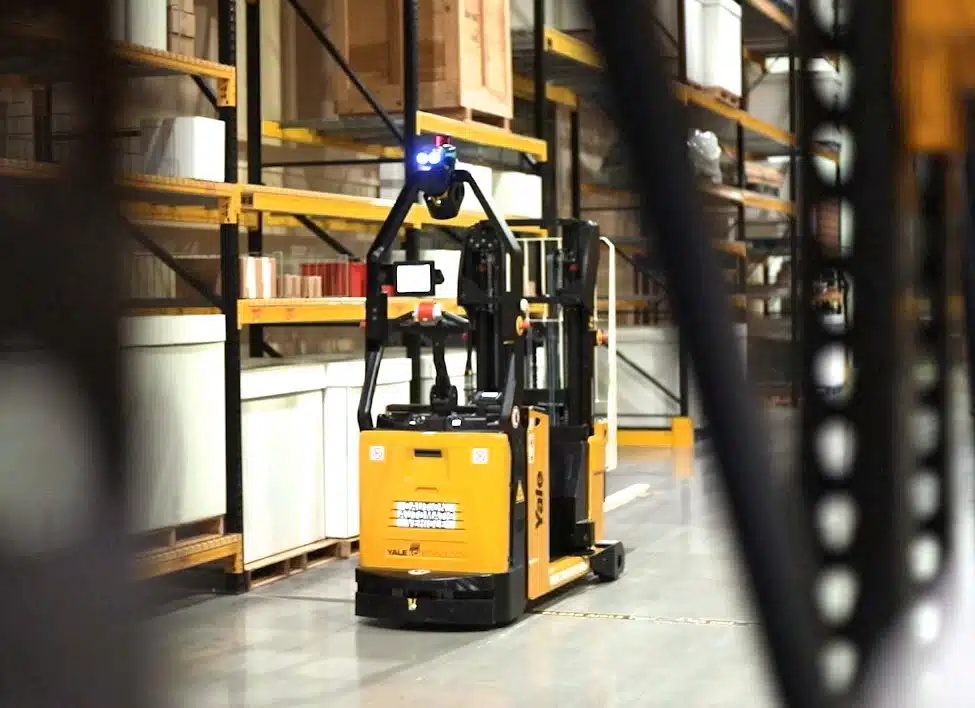
Despite people’s fears, automated warehouse robots are not coming to take all the material handling jobs. In fact, most warehouse automation, including robotic forklifts, complement human labor by handling repetitive tasks and freeing up warehouse workers for more skilled, value-added tasks. That said, if your warehouse is struggling through a labor shortage due to high turnover for forklift operator positions, robotic lift trucks can help fill in the gap. In fact, robotic lift trucks from Yale can switch easily between automated and manual mode, making them useful to companies who want to utilize warehouse automation in tandem with their current forklift operators.
Myth #2: Automation is Only Suitable for Large Warehouses
Another myth about automation in material handling is that automation is only suitable for large warehouses. The truth is that robotic forklift trucks and other warehouse automation can be successfully implemented in warehouses of any size. If your operation has multiple shifts, repeatable paths, long runs, and a dedicated head count, you will benefit from robotic lift trucks.
Myth #3: Robots Are Too Expensive
New technology can be expensive, but the average ROI for an automated lift truck is 12-24 months, depending on the number of shifts. For 3-shift operations, for example, you’ll likely be looking at a 1-year ROI. Since robotic forklifts last for 4-5 years with proper maintenance, you’ll end up seriously reducing labor costs., increasing accuracy, and reducing accidents. Plus, while some physical changes may be suggested for maximum efficiency, robotic forklifts can work quite efficiently within most existing infrastructures.
Myth #4: Robots Are Too Complex to Implement
You don’t need to master complicated software to take advantage of autonomous forklifts. In fact, application can be as simple or complex as your application requires, and alternative routes can be built-in during installation. That means that most changes you would need to make wouldn’t require working with a manufacturer like Yale to implement.
Myth #5: Robots Require No Maintenance or Oversight
Like all material handling equipment, robotic lift trucks do require regular maintenance to be performed by Yale or your heavy equipment dealer. With your full maintenance agreement, you’ll only be responsible for damage caused by misuse. As far as oversight, while robotic forklifts are fully autonomous, a floor supervisor is needed to respond if the machine encounters an exception that requires intervention.
Want to learn more about robotic forklifts and other warehouse automation for your Chicago metro area business? Contact one of our material handling solutions experts at Voss Equipment today! In the meantime, check out our heavy equipment blog where we cover other forklift technology, including Yale Reliant operator assistance technology, or shop our huge selection of forklifts for sale near Chicago.